Winter School on Life Course

Doctoral candidates can apply until December 10, 2015 to the 3rd Winter School on Life Course, which is organized by the Swiss National Centre of Competence in Research LIVES in collaboration with Oregon State University, University of Bremen, Western University, and Umeå University.

A previous edition of this winter school resulted in an article that was published in the European Sociological Review this year, under the supervision of instructors Rick Settersten, Véronique Eicher and Dario Spini: “Normative Climates of Parenthood across Europe: Judging Voluntary Childlessness and Working Parents” 

The next Winter School on Life Course will take place from February 27 to March 5, 2016, again in the Swiss Alps.

This third edition will feature two workshops with the following instructors:

  1. Loss of a partner – a life-course perspective
  • Laura Bernardi, professor of life course and demography at the University of Lausanne
  • Pasqualina Perrig Chiello, professor of psychology at the University of Berne
  • Betina Hollstein, professor of sociology at the University of Bremen
  1. How to preserve cognitive health in old age?
  • Matthias Kliegel, professor of psychology at the University of Geneva
  • Andreas Ihle, senior researcher and lecturer at the University of Geneva
  • David Bunce, professor of neuropsychology at the University of Leeds

These interdisciplinary workshops will occur in small groups of 6 to 8 students. The experts will lead each of these research workshops with the aim of preparing collaborative articles through a process of learning by doing.

For more details on the workshops, information about the venue and the costs as well as the registration procedure, please consult https://www.lives-nccr.ch/en/winterschool_2016.
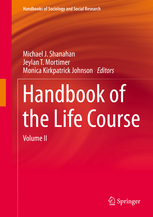
Handbook of the Life Course, Vol II

handbook-cover

We are very pleased to announce the second volume of the Handbook of the Life Course (edited by Michael Shanahan, Jeylan Mortimer, and Monica Kirkpatrick Johnson) is now available from Springer.

In the words of one of the editors, “Many members of SALC have joined with scholars from cognate disciplines and overseas, to produce this new volume, emphasizing emerging trends, challenges, and new directions in life course studies.”

The volume is available via purchase of the hardcover and paperback book, purchase of individual chapters, or free download of the entire volume for scholars and students affiliated with an institution that is a member of SpringerLink.

Chapters include:

  1. Introduction: Life Course Studies – Trends, Challenges, and Future Directions
  2. Institutionalization of Life Course Studies
  3. Age, Cohorts, and the Life Course
  4. Opening the Social: Sociological Imagination in Life Course Studies
  5. The Changing Social Construction of Age and the Life Course: Precarious Identity and Enactment of “Early” and “Encore” Stages of Adulthood
  6. Structuration of the Life Course: Some Neglected Aspects
  7. Family Heterogeneity Over the Life Course
  8. Educational Pathways
  9. College for All: New Institutional Conflicts in the Transition to Adulthood
  10. Changes in Educational Inequality in Cross-National Perspective
  11. Work Over the Gendered Life Course
  12. Military Service in Lives: Where Do We Go From Here?
  13. Criminal Justice and the Life Course
  14. Disaster and Life Course Processes
  15. Early Childhood Poverty: Short and Long-Run Consequences Over the Lifespan
  16. Does the Body Forget? Adult Health, Life Course Dynamics, and Social Change
  17. Living Healthier and Longer: A Life Course Perspective on Education and Health
  18. Life Course Lens on Aging and Health
  19. Mental Health
  20. Agency Across the Life Course
  21. Cognitive Development and the Life Course: Growth, Stability and Decline
  22. Longitudinal Qualitative Research
  23. Causality in Life Course Studies
  24. The Logic and Practice of Growth Curve Analysis: Modeling Strategies for Life Course Dynamics
  25. Three Generation Studies: Methodological Challenges and Promise
  26. Neighborhood, Place, and the Life Course
  27. Life Course Research and the Shaping of Public Policy
  28. Epidemiological Perspectives on the Life Course
  29. The Influence of Social Welfare Policies on Health Disparities Across the Life Course
  30. Life Course Risks and Welfare States’ Risk Management
  31. Longitudinal Studies and Policy for Children in Low- and Middle-Income Countries: Evidence from Young Lives
  32. Lags and Leaps: The Dynamics of Demography, Economy and Policy and Their Implications for Life Course Research

Check it out at http://www.springer.com/us/book/9783319208794.

Postdoc opportunity at Andrus Gerontology Center, USC

The Andrus Gerontology Center at the USC Davis School of Gerontology seeks outstanding candidates for both pre and postdoctoral appointments. Their multidisciplinary research training program is sponsored by the National Institute on Aging and is housed here at the Andrus Gerontology Center, USC. The Multidisciplinary Research Training in Gerontology program funds seven predoctoral trainees and three postdoctoral trainees per year. These trainees are appointed by preceptors who hold faculty positions in the Graduate School, representing the Departments of Gerontology, Economics, Neuroscience, Preventive Medicine, Psychology, and Sociology. Please see the attached flyer and visit their website for more information.

Endowed Chair Opening at Florida State

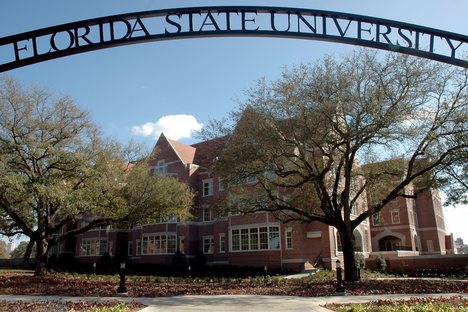
FSU-West-EntranceThe Florida State University Department of Sociology invites applications for the Mildred and Claude Pepper Eminent Scholar Chair in Social Gerontology. The Pepper Eminent Scholar Chair is an endowed position tied to the Pepper Institute on Aging and Public Policy in the College of Social Sciences and Public Policy. The Chair is expected to complement one or more of the Pepper Institute’s four research foci: (1) aging and health disparities, (2) pathways to later life, (3) transportation and neighborhoods, and (4) politics of aging.  We are seeking applications from scholars at the Associate or Full Professor levels who have a record of funded research and experience with interdisciplinary research on aging-related policy issues. Applications should include a personal letter and curriculum vitae; letters of reference will be requested at a later date. Screening will begin immediately and continue until the position is filled.  All application materials should be submitted electronically to John Reynolds, Chair, at sociology@fsu.edu.

Florida State University is a Carnegie Foundation-classified Research I institution.  Among its 42,000 students are 8,500 graduate students pursuing over 200 programs of study.  For information about the Department of Sociology, visit our webpage at http://coss.fsu.edu/sociology/. For information about the Pepper Institute on Aging and Public Policy, visit http://pepperinstitute.fsu.edu. Related activities at Florida State include the Claude Pepper Center (http://claudepeppercenter.fsu.edu/), the Institute for Successful Longevity (http://isl.fsu.edu/) and the USDOT-funded Center for Accessibility and Safety for an Aging Population (http://utc.fsu.edu/).  Tallahassee is Florida’s capital, affording access to policy makers, state agencies, and advocacy organizations; principal employers are state government and three higher education institutions.

Florida State University is an Affirmative Action/Equal Opportunity Employer.  Members of race-ethnic minority groups are particularly encouraged to apply.

Seeking nominations for SALC Council — Deadline Oct 15

Please consider nominating yourself, a colleague, or a graduate student to serve on SALC council! This is a wonderful opportunity to become more involved with our section activities, including serving on paper award committees, helping to organize sessions at the annual meeting, and developing section programs and initiatives. Please email Deborah Carr (carrds@rutgers.edu) by October 15, 2016 with your suggestions for potential candidates for the following officers:

  • Chair-Elect
  • Council Member (two)
  • Secretary-Treasurer
  • Student Council Member

Potential candidates can also reach out to committee members with questions regarding the specific tasks associated with each position. Thank you for your cooperation and nominations! 

Special issue of Journal of Gerontology on methodological innovations

Clipboard01Journal of Gerontology: Psychological Sciences and Social Sciences invites papers for an upcoming joint special issue on methodological innovations in psychosocial research on aging. Authors are encouraged to apply innovative methods and data resources to both emerging or core questions in social gerontology. Authors also are encouraged to conclude with a brief assessment of the value of the innovative method or data source used; that is, how might innovative methods advance our substantive knowledge above and beyond what we would learn using “traditional” methods? Details on the mission of the special issue and submission procedures can be found at the following link: http://bit.ly/1LnPF5s

International Conference on Social Stress Research — Call for Papers

The 15th International Conference on Social Stress Research will be held June 4-6, 2016 in San Diego, CA at the W Hotel. The International Conference on Social Stress has become an important conference for scholars working in the area of stress and health and a major forum for sharing new research that incorporates components of the stress process. The stress conferences, sponsored by the University of New Hampshire, are held approximately every two years and attract the leading scholars in the field.

640px-Sandiego_skyline_from_coronado
San Diego waterfront

The 2016 conference will feature two keynote speakers (to be announced). Previous keynote speakers have included Leonard Pearlin, Howard Kaplan, Ronald Kessler, Bruce Dohrenwend, George Brown, Robert Weiss, Michael Rutter, Hamilton McCubbin, Peggy
Thoits, R. Jay Turner, Carol Aneshensel, Elizabeth Meneghan, Bruce Link, Blair Wheaton, James House, Allan Horwitz, William Avison, Linda George, John Mirowsky, Sarah Rosenfield, Scott Schieman, Chloe Bird, and David Williams. The conference is organized and directed by Professors Heather Turner, Karen Van Gundy, and Catherine Moran in the Department of Sociology at the University of New Hampshire.

The final program will be based on the content of the submissions. Typically, the conference includes sessions on themes such as: stress across the life course; work-related stress; stress in family contexts; gender and stress; race, ethnicity, and culture in the stress process; stress in adolescence; intersections of physical and mental health; catastrophic and traumatic stress; and neighborhood context of stress.

We invite you to submit either a complete paper or an extended abstract. In the case of abstracts, you must provide sufficient information for evaluation of the substance and scientific merit of the paper.

To be considered for presentation, please submit papers or extended abstracts by January 8, 2016. Further information regarding the 2016 conference will be available soon on our website: http://www.unh.edu/stressconference.

Send all papers/abstracts or requests for information to Catherine Moran at Catherine.Moran@unh.edu.

Join SALC…for Free!

MembershipMatters

Thanks to generous donations from members, SALC is able to finance Section membership for the first 100 members of ASA who join SALC (includes students and others) or renew their membership (if it has lapsed).  It’s easy.

To join SALC, all one needs to do is to fill out three questions at the following link (name, e-mail, & confirm ASA membership): http://bit.ly/1NrEvCV by September 29.  You can complete the form for your interested students or colleagues, but please confer with them about this in advance.

Design a site like this with WordPress.com
Get started